Every ventilation manufacturer promises that their system saves energy and keeps the air fresh. We don’t want you to just take our word for it. When we say Airobot uses less energy and keeps indoor air healthier, we want science behind that claim.
That’s why Airobot is joining a research and development project run by TalTech and Tallinn University of Applied Sciences (TTK): “Sustainable Technologies for Zero-Emission Buildings” (TEM-TA227).
What is the project about?
The project aims to make buildings’ energy use more efficient and support a climate-neutral building stock. It is run by TalTech and Tallinn University of Applied Sciences (TTK), with Raimo Simson of TalTech’s Department of Civil Engineering and Architecture as the responsible researcher.
Partners in the project include Airobot, Merko Ehitus and Kaamos, among others — 12 companies and professional associations in total. Builders, developers, energy companies, technology manufacturers and professional associations are all at the table: a rare chance to look at a building as a whole, from design all the way through to how people actually live in it day to day.
The project runs from September 2026 to August 2029 and is part of the Thematic Research and Development Programme TemTA, under the focus area “Smart and sustainable energy solutions.” TemTA brings Estonian researchers and companies together — what sets it apart is that the starting point is the real challenges facing companies and sectors, not just researchers’ own ideas. In the programme’s second round, 65 projects were selected from 112 applications, with a combined budget of €50.6 million, co-funded by the European Union and the Estonian Ministry of Education and Research.
One of the project’s main directions is exactly our subject
The project has three main research directions: demand-based indoor climate systems, energy flexibility and capacity management, and climate resilience and cooling in buildings.
The first of these is what Airobot works on every day. The project develops ventilation control and monitoring based on indoor air quality, in line with the EU’s Energy Performance of Buildings Directive. It studies how to make air exchange more efficient and how to modernise existing ventilation systems so they operate on demand.
In other words: how to deliver air where people are, instead of wasting energy on empty rooms.
Where are the solutions tested?
Not only in a lab. The project’s results are validated in real buildings, including new and renovated apartment buildings, as well as in TalTech’s laboratories.
Airobot is contributing to the development of demand-based ventilation solutions and testing them in real buildings. That’s where it becomes clear whether the system really knows where air is needed: real life, real people, and a real Estonian winter.
What does this mean for you?
Ventilation is one of the biggest energy consumers in a building. A traditional system treats every room the same, regardless of whether anyone is actually in it.
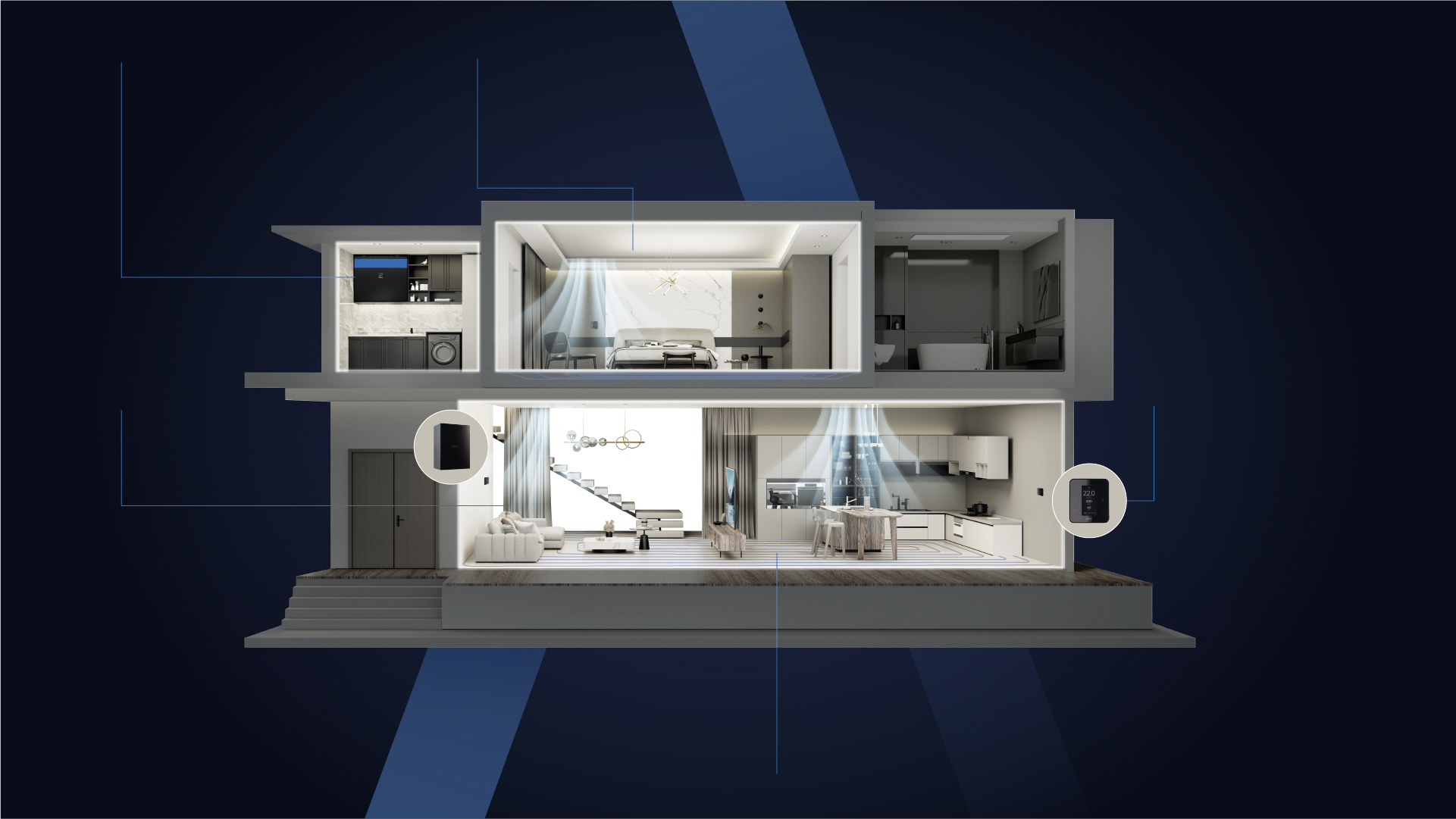
Airobot’s system measures in every room the CO₂ level, humidity and volatile organic compounds (VOCs), and directs fresh air exactly where it’s needed. Empty rooms don’t need ventilation running at full capacity.
“The future of ventilation is in systems that measure what’s happening in every room and adapt to what’s actually going on in the building. This approach can meaningfully cut heating costs while keeping the indoor climate healthy for the people living there. The TemTA project gives us the chance to develop and test these solutions together with researchers and builders in real buildings,” says Airobot’s CTO Gert Valdek.
What’s next?
We’ll share what we learn along the way, including whatever surprises us.
You can find the project description on TalTech’s TemTA projects page and the programme’s official announcement on the Estonian Ministry of Education and Research’s website.
Frequently asked questions
What is demand-based ventilation?
Demand-based ventilation adapts air exchange to what’s actually happening in each room. The system measures indoor air quality, such as CO₂ levels, humidity and volatile organic compounds (VOCs), and delivers more fresh air where people are and less to empty rooms. A conventional system, by contrast, runs the same way at all times.
Does demand-based ventilation save energy?
Yes, because empty rooms don’t need ventilation running at full capacity, and less air needs to be heated. Exactly how much can be saved depends on the building and how it’s used, which is precisely what’s being studied in the TemTA project “Sustainable Technologies for Zero-Emission Buildings”. According to Airobot’s data, zonal ventilation can cut energy use by up to 35%.
What is the TemTA programme?
TemTA, the Thematic Research and Development Programme, brings Estonian researchers and companies together to solve real challenges facing companies and sectors. It is run by the Estonian Research Council and co-funded by the European Union and the Estonian Ministry of Education and Research. In the programme’s second round, 65 projects were selected from 112 applications, with a combined budget of €50.6 million.
Where are Airobot’s solutions tested in the project?
The project’s results are validated in real buildings, including new and renovated apartment buildings, as well as in TalTech’s laboratories. Airobot is contributing to the development of demand-based ventilation solutions and testing them in real buildings.

Read next: How Good Is the Air in Your Home, Really? 5 Common Beliefs About Ventilation