Easier breathing, better sleep and stronger protection in winter: what’s worth knowing
We spend about 90% of our time indoors (US EPA), much of it at home, so the air there matters more than we tend to think. Yet we rarely give it a thought. There are plenty of beliefs about ventilation that sound logical but don’t quite hold up. Let’s look at the five most common ones, and how they affect your sleep, your wellbeing and the cost of running your home.
1. “Ventilation dries out the indoor air”
This is one of the most common worries in winter, and a perfectly understandable one. Cold outdoor air is very dry, and when it’s brought indoors and warmed up, the indoor humidity drops. A relative humidity of 40–60% is generally considered good and supportive of health, but in winter it can drop even below 20%.
You feel dry air as a dry throat, stinging eyes and static electricity. Humidity that is too low dries out the mucous membranes and weakens the body’s defences. This matters most during the winter season. (Kudo et al., PNAS, 2019)
The truth: not every ventilation unit dries out the air.
With Airobot: your home produces moisture every day: when you shower, cook and even breathe. Ordinary ventilation simply carries that moisture outside. Airobot’s moisture recovery returns part of the moisture in the air extracted from bathrooms and the kitchen back into the supply air. That way, your home’s own moisture stays at home. If that isn’t enough in the coldest weeks, a central humidifier can be added to the system to keep an even humidity of about 40% throughout the house. So you don’t have to choose between fresh air and a comfortable indoor climate.
2. “Opening a window is enough”
Airing the house in the morning is a good habit. A short, intense airing replaces the indoor air quickly and lowers the level of carbon dioxide (CO₂).
But the effect is temporary. Once the window is closed again and there are people in the room, the CO₂ level rises again within a few hours. We spend the most time in the bedroom, and it’s at night, when the window stays shut in winter, that the air is at its heaviest. In one study, the share of deep sleep fell from about 20% to 14% when bedroom CO₂ rose from 680 ppm to 1350 ppm, which is like three people sleeping in the room instead of one. (Wang et al., Buildings, 2023) During the heating season, an open window also lets heat escape, and money with it.
The truth: a window helps for a moment; ventilation keeps the air fresh all the time.
With Airobot: demand-controlled ventilation constantly monitors the air quality in every room and adjusts the air exchange automatically. So the bedroom has fresh air all night long, without you opening a window or adjusting the ventilation yourself.
3. “A CO₂ sensor inside the unit is enough”
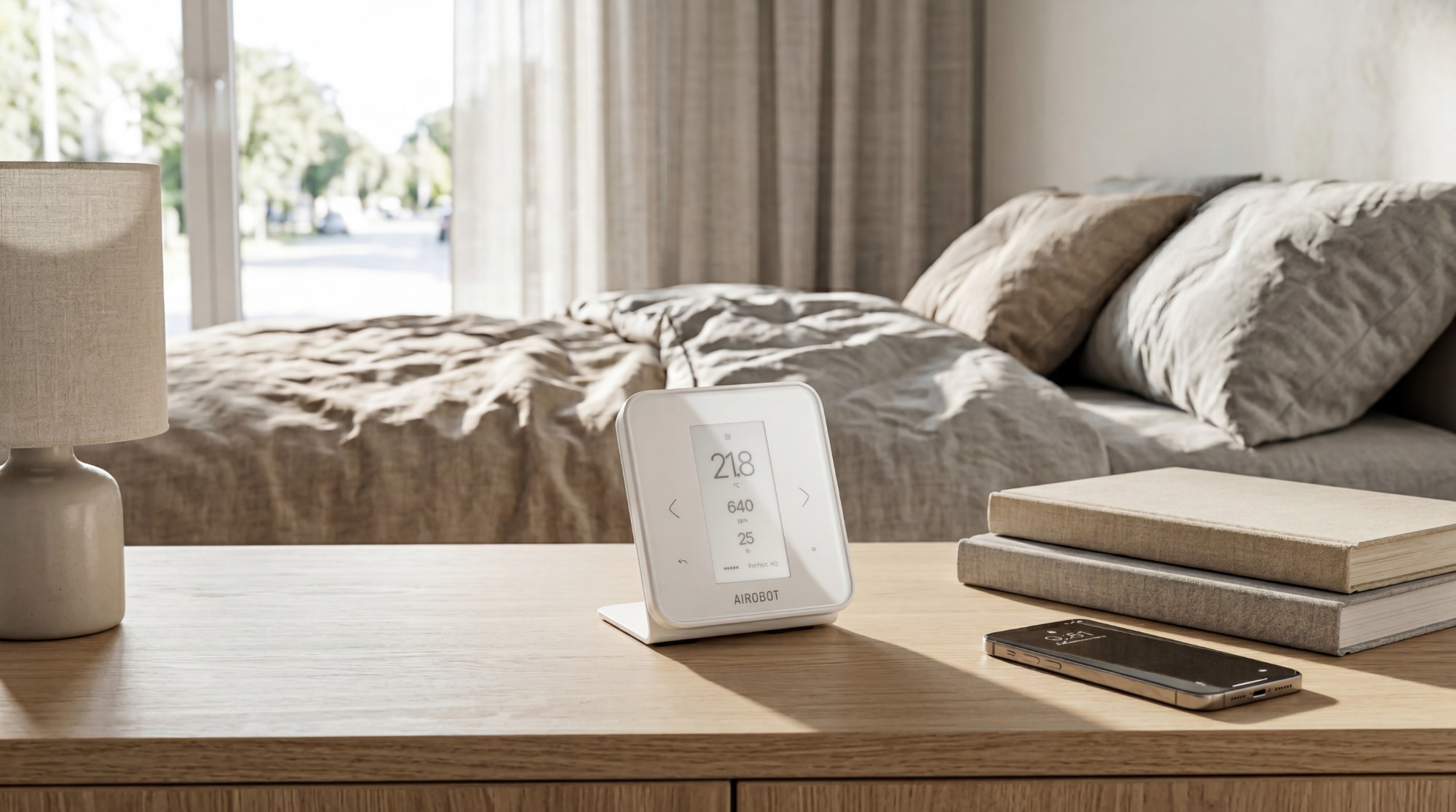
Today, several manufacturers offer a CO₂ sensor built into the ventilation unit. But it measures the mixed air of the whole house, an average, not what you breathe in your bedroom.
Picture this: the bedroom door is closed, two people are sleeping inside and the CO₂ level keeps rising through the night. Meanwhile the living room and the guest room are empty and the air there is fine. The unit sees the average and concludes that everything is fine.
The truth: an average tells you nothing about the air you actually breathe.
With Airobot: CO₂ is measured in every room separately. So the system knows that the air in the bedroom has become heavy, even if the rest of the house is empty. Fresh air goes where it’s really needed.
“CO₂ buildup and poor indoor air quality are often overlooked stressors on athletes’ recovery. Airobot addresses these issues with precision and effectiveness. I’ve seen the difference it can make.”
Dr. Mihkel Mardna, MD Sports Medicine

4. “Every room needs the same amount of air”
Ordinary ventilation works the same way throughout the house. An empty guest room gets as much air as the bedroom where the whole family sleeps, and a home office that nobody uses during the day gets as much as the living room where the family spends the evening.
The truth: each room needs as much air as there are people in it at the time.
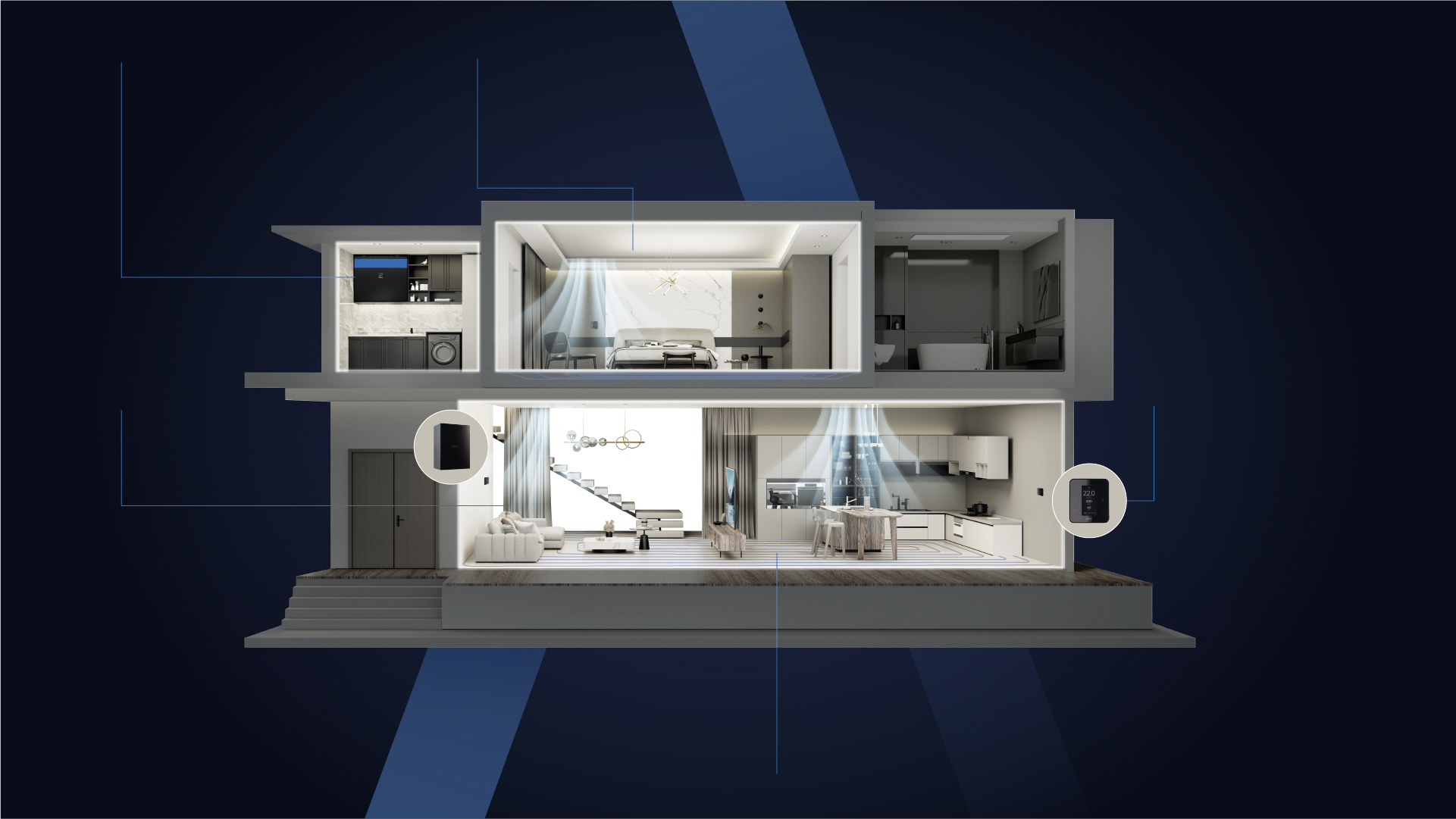
With Airobot: zonal ventilation adjusts the air exchange to which rooms are being used, and how much. During the day the living room gets more fresh air, at night the bedrooms do. In empty rooms, the ventilation doesn’t need to run at full power. So you only use energy where it’s actually needed. According to a TalTech study, zonal ventilation uses 35% less energy for heating and ventilation combined.
5. “A new ventilation unit is only for new houses”
Many people think a ventilation unit is tied to a house for life, and that a new one only fits a new build or a major renovation. Living with an old, poorly performing unit often feels easier than facing what seems like a complicated, costly replacement.
The truth: if the house already has a ventilation system, the old unit can be swapped for a new one within that existing system.
With Airobot: we’re replacing more and more old units with Airobot. Because the existing system stays in place, the swap usually takes just half a day, with minimal disruption to the home. The result is an older house with a new breath — fresher air and a better indoor climate right from day one.
Airobot doesn’t just exchange the air
Demand-controlled ventilation, moisture recovery, measurement in every room, zonal ventilation and heating control all work together in one Airobot system. Airobot makes sure your home’s indoor climate adapts to your life and your needs: fresh air where you are, a comfortable indoor climate even in winter, and lower energy use where you aren’t.
See how zonal ventilation works, and calculate how much your home could save →