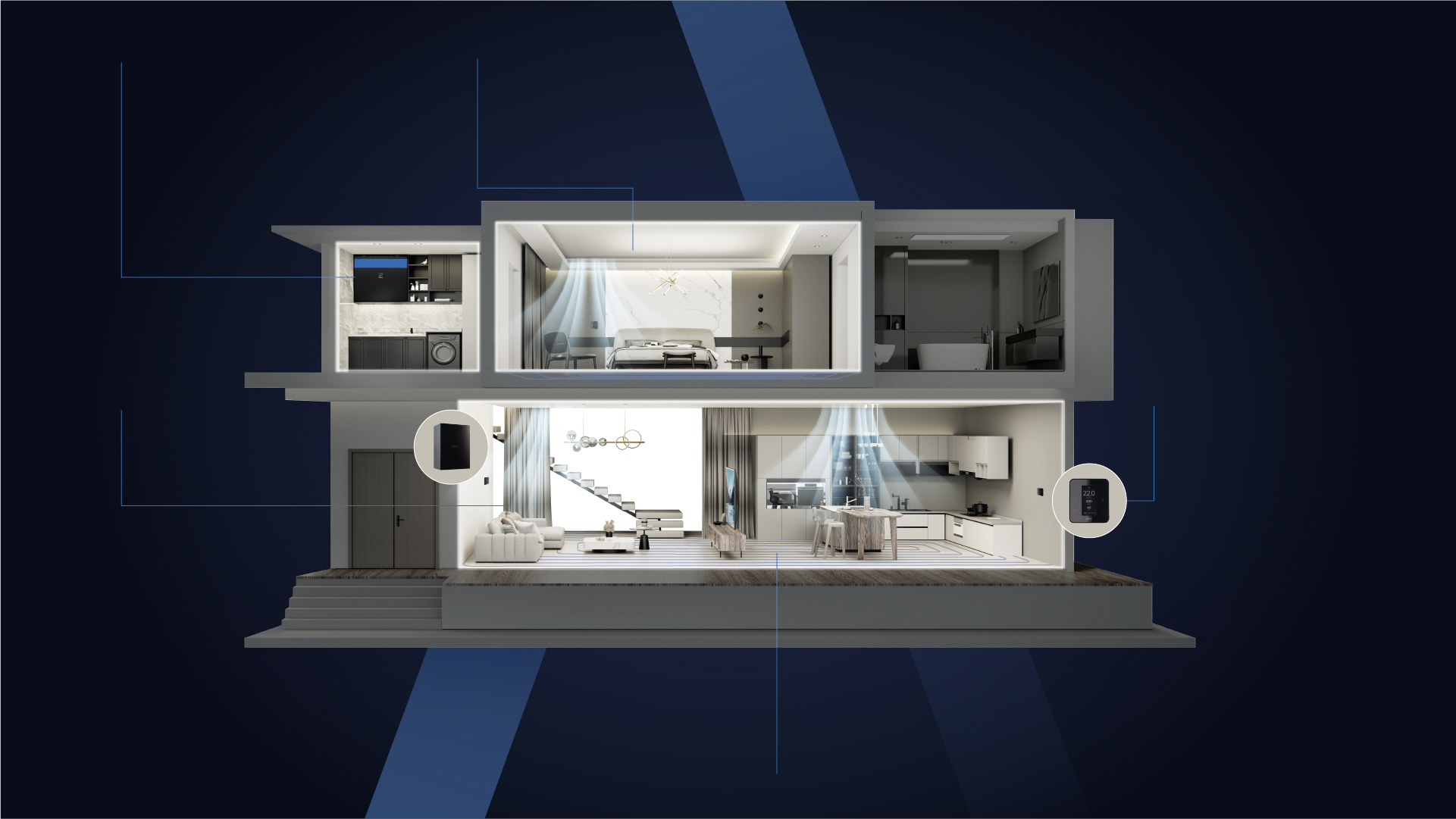
In a recent study by TalTech University, researchers tested four different ventilation strategies in a 160 m² single-family home with five rooms and a typical family of four people. The goal? To determine which ventilation method provides the optimal balance of air quality and energy savings, the results were clear.
Using zonal ventilation, the home used:
- 17% less energy for space heating
- 46% less energy to heat the supply air
- And 64% less electricity for fans
That’s a total energy savings of 35% — simply by changing how fresh air is delivered throughout the house.
Let’s break down how zonal ventilation works, and why it’s a smarter, quieter, and more efficient way to ventilate your home.
What Is Zonal Ventilation?
Traditional ventilation systems treat every room the same — pumping in the same amount of air, all the time, regardless of whether the room is in use. This is called constant airflow, and while it ensures air changes, it also leads to wasted energy by ventilating empty rooms.
Zonal ventilation takes a smarter approach. It divides your home into separate zones (in this case, daytime and nighttime areas) and uses sensors to detect where people actually are. Fresh air is then directed only to the occupied zones, based on real-time CO₂ levels.
This ensures optimal air quality only where needed, saving energy and reducing unnecessary airflow.

Tested in Realistic Conditions
The TalTech simulation modeled real Estonian climate data and typical family behavior:
- Bedrooms were occupied mainly at night
- The living room, kitchen, and home office saw higher daytime use
- The building was ventilated using Airobot central heat recovery unit
Each control strategy was tested with these systems to compare energy use and indoor air quality under everyday conditions. The zonal control strategy, which grouped bedrooms into one zone and daytime spaces into another, came out on top.

Why Zonal Ventilation Saves Even More
Airobot ventilation units include heat recovery technology, which captures heat from outgoing air and transfers it to the fresh incoming air. This helps retain warmth indoors and reduces the need for extra heating — a must-have for energy-conscious homeowners.
But here’s where zonal ventilation takes it further:
- It avoids ventilating empty rooms, which means less heat is pulled out of those spaces
- The system runs at lower speeds, so heat recovery works more efficiently
- And since it doesn’t need to push as much air, the device runs more quietly
That means more comfort, lower heating bills, and better sleep, especially during the colder months.
Smarter Comfort, Backed by Research
The TalTech study also confirmed that zonal ventilation maintained Category II indoor air quality, as defined by European standards. Even at lower airflow rates, CO₂ levels stayed within healthy ranges in both bedrooms and living areas, proving that energy savings didn’t come at the cost of fresh air.
Compared to traditional systems, which either overventilate or respond too slowly to changing conditions, Airobot’s zonal approach adapts instantly, based on room-by-room sensor data.
Want to Breathe Smarter?
Whether you’re building a new home or upgrading an existing one, Airobot’s dual-zone ventilation system helps you stay comfortable while reducing energy use automatically. With research to back it, zonal ventilation isn’t just smart. It’s proven.